How to Become a Heating Engineer in the USA
How to Become a Heating Engineer in the USA
In the USA, the closest equivalent to a UK heating engineer is an HVAC technician specialising in heating systems — furnaces, heat pumps, boilers, and hydronic heating. The career path is well-defined, the pay is strong, and demand is growing rapidly as the US transitions away from fossil fuel heating systems.
Step 1: Complete an Apprenticeship or Vocational Programme
Most US heating engineers enter the field through either a union apprenticeship (typically 4–5 years through the UA or SMART) or a vocational/technical school HVAC programme (typically 6 months to 2 years). The apprenticeship route includes paid on-the-job training from day one; vocational programmes provide faster classroom qualification but require separate field experience.
HVAC vocational programmes are offered at community colleges and trade schools across the US. Costs range from $1,200–$15,000 depending on length and institution. The US Department of Education’s college finder tool helps identify accredited programmes by state.
Step 2: EPA 608 Certification
EPA Section 608 certification is federally required for any technician who handles refrigerants — which includes heat pump work. This certification covers refrigerant handling, recovery, and safe practices. It is obtained through an approved testing organisation and has no time limit once earned. This is a non-negotiable qualification for any HVAC work involving heat pumps or refrigerant-based systems.
Step 3: State Contractor Licence
Most US states require HVAC contractors to hold a state contractor licence. Requirements vary but typically include a written examination, proof of field experience (2–6 years), and proof of insurance. Some states have a tiered system — a journeyman licence first, followed by a contractor or master licence after additional experience.
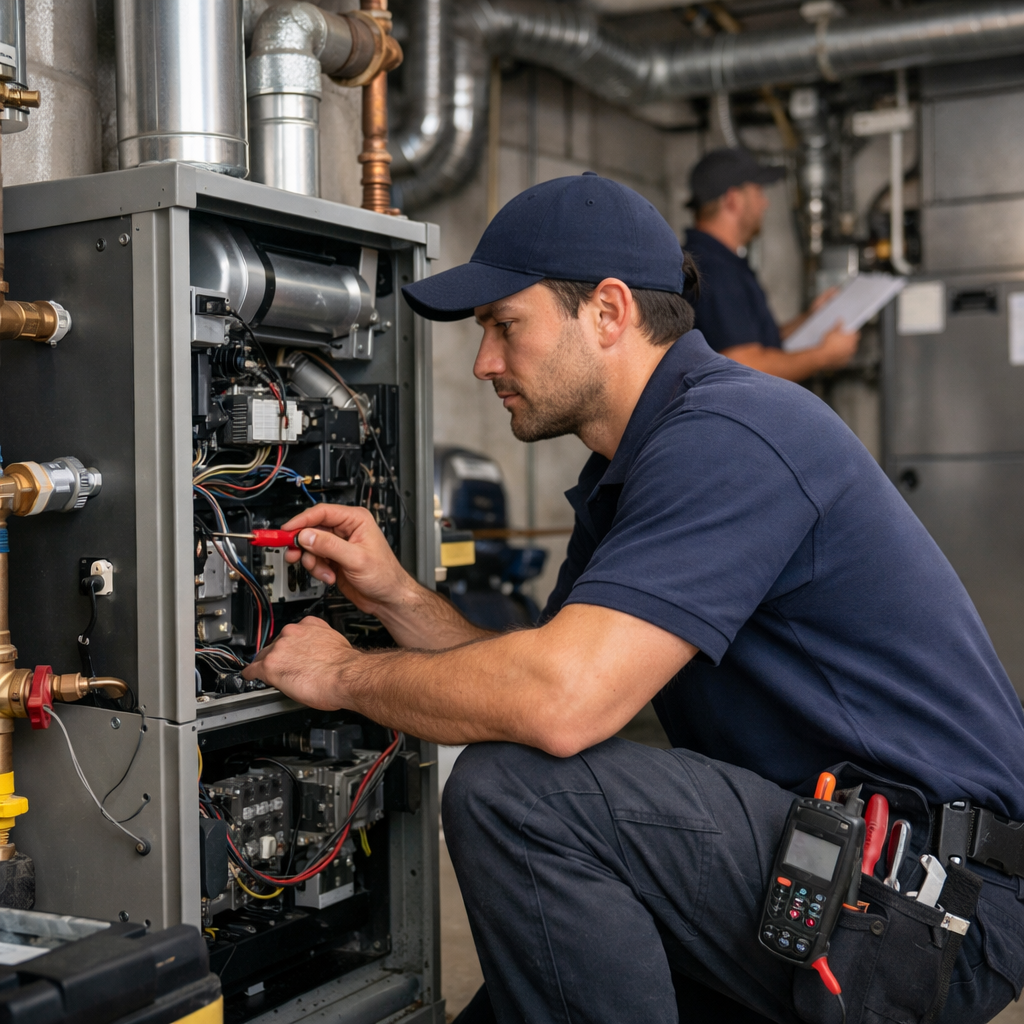
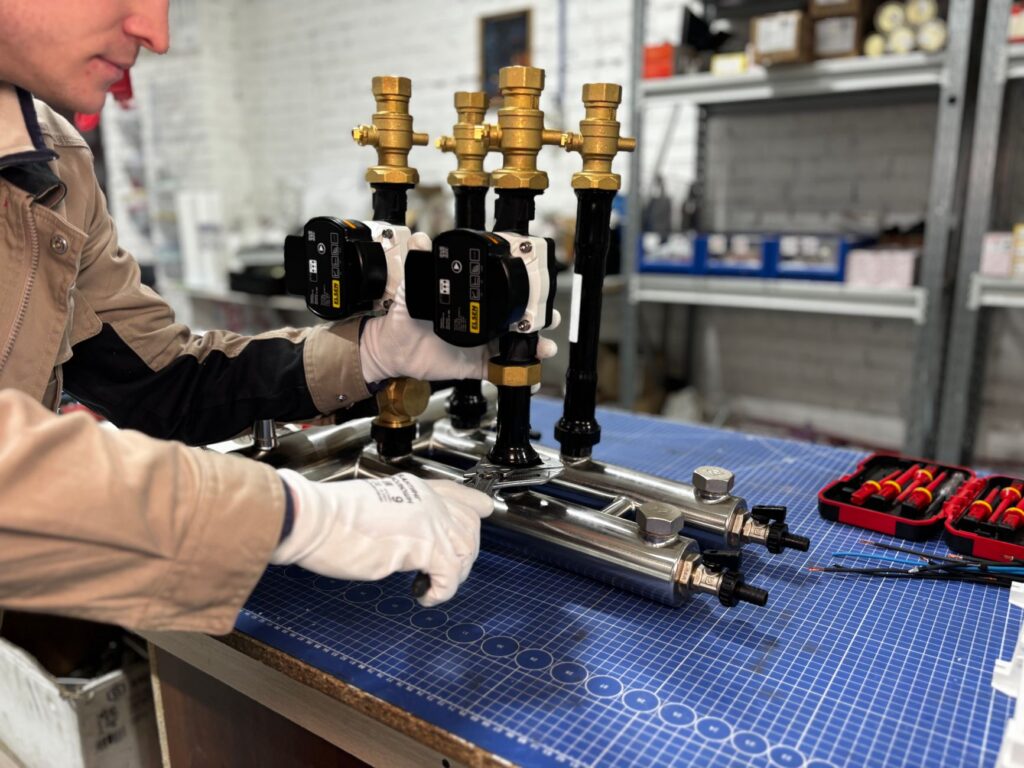
In the USA, the equivalent of a UK heating engineer is an HVAC technician – specifically one who specializes in heating systems (furnaces, heat pumps, boilers, and hydronic heating). There is no separate ‘heating engineer’ classification; HVAC covers heating, cooling, and ventilation as a combined discipline.
Career pathway: – HVAC apprenticeship (4-5 years): On-the-job training + classroom instruction in heating, cooling, and refrigeration – EPA 608 certification (during apprenticeship) – Journeyman HVAC technician – Specialization: heating-focused (furnaces, heat pumps, boilers) vs. cooling-focused vs. commercial – State contractor license (if running own business)
Heating specialization areas: – Gas furnace service and installation – Heat pump (air source and ground source) systems – Boiler and hydronic heating (residential and commercial) – Radiant floor heating
FAQs
Do US HVAC technicians work on gas-fired equipment? Yes – gas furnaces are the dominant heating system in most US climates. HVAC technicians service and install gas furnaces without a separate ‘gas license’ in most states (unlike the UK’s Gas Safe registration). The work is covered under their HVAC contractor license and state mechanical codes.
What does a heating-focused HVAC technician earn in the USA? Experienced HVAC technicians earn $55,000-$100,000/year employed. Self-employed HVAC contractors with their own client base earn $100,000-$200,000+/year depending on market and volume.
CoreQuote is a quoting and invoicing app for US tradespeople. Download free on Android — get CoreQuote free.
Related reading:
- How to Start an HVAC Business in the USA: The Complete Guide
- How to Get Your HVAC License in the USA
- What is ACS Certification and Does It Apply to US HVAC Contractors?
- How Much Does an HVAC Technician Charge Per Hour in the USA? (2026)
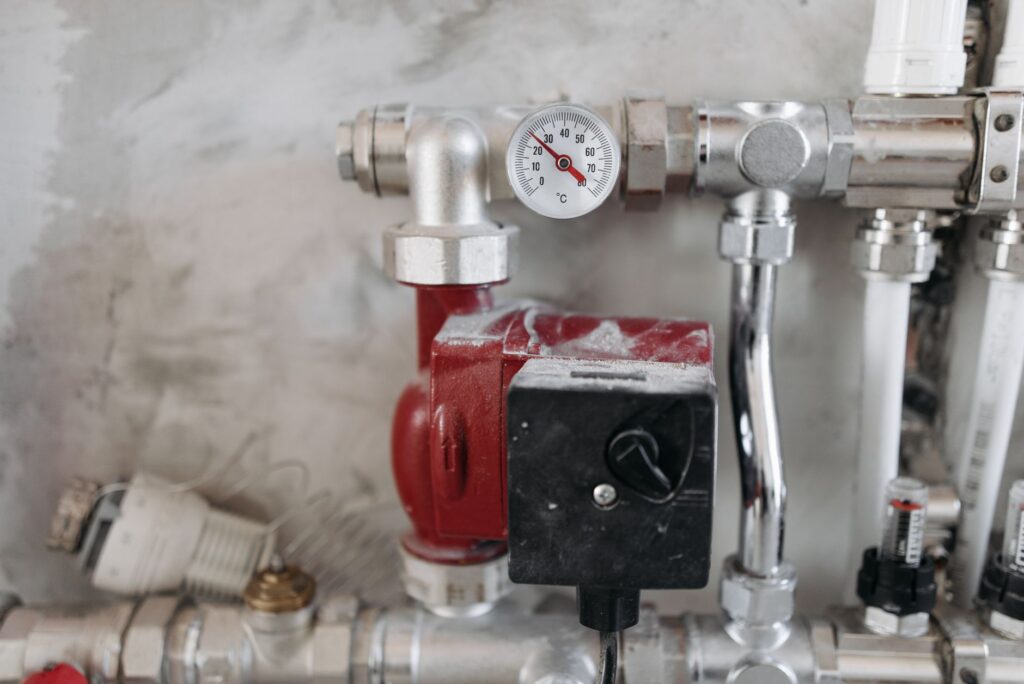
Specialist Heating Certifications Worth Having
NATE (North American Technician Excellence) certification is the most widely recognised voluntary certification for HVAC technicians. The heating-specific NATE exams cover furnace, heat pump, and hydronic systems. NATE certification is not legally required but is increasingly requested by commercial clients and larger service companies.
As the US transitions to heat pump heating, proficiency in cold-climate heat pump installation and commissioning is becoming a significant differentiator. Manufacturer training programmes from Mitsubishi, Bosch, and Carrier cover their specific systems and are usually free or low-cost.
Quote jobs in seconds. Free forever.
Send professional quotes from your phone, on-site.
Download CoreQuote FreeA vocational HVAC programme takes 6–24 months; a union apprenticeship takes 4–5 years. Both routes lead to full qualification. The BLS Occupational Outlook for HVAC Technicians covers salary, demand, and entry routes in detail.
EPA 608 is required for any work involving refrigerants — including heat pumps. It is not required for pure fossil fuel heating work (furnaces, boilers without refrigerant components). The Air Conditioning Contractors of America has guidance on certification requirements for US heating technicians.