
How to Sell Your Trades Business in the UK: A Practical Guide

Selling a trades business in the UK is more achievable than many business owners realise — but it requires preparation, realistic valuation expectations, and an understanding of what buyers are actually looking for. Whether you are planning a sale in five years or five months, the decisions you make now significantly affect the price you can achieve.
What Makes a Trades Business Saleable?
Buyers — whether trade buyers (a larger company acquiring your customer base and workforce) or financial buyers (investors looking for a return) — look for the same core things: recurring revenue or a loyal customer base, systems and processes that do not depend entirely on the owner, trained staff who will stay post-sale, and clean, accurate financial records.
The most common problem with trades business sales is that the business is too dependent on the founder. If you are the relationship, the salesperson, the quality controller, and the primary technician, the business has limited value without you. Systematising your operations — documented processes, a good quoting and invoicing system, reliable staff — directly increases what buyers will pay.
Valuation: What Is a Trades Business Worth?
Most small UK trades businesses are valued on an EBITDA (earnings before interest, tax, depreciation, and amortisation) multiple — typically 2–5x for sole traders and small teams, rising to 5–8x for businesses with strong recurring revenue, a management team, and systematic operations. A business turning over £400,000 with £100,000 EBITDA might sell for £200,000–£500,000 depending on its characteristics.

Preparing for Sale
Start preparing at least two years before your target sale date. Clean up your financial records (buyers will want three years of accounts). Document your processes. Reduce owner-dependency. Ensure your customer base is diversified — no single customer representing more than 20% of revenue. Consider Federation of Master Builders membership if not already a member, as it provides accreditation that adds credibility to a sale.
Finding a Buyer
Trade buyers — competitors or larger companies in adjacent trades — are the most common acquirers of small UK trades businesses. Business brokers with construction industry experience are worth their commission for deals over £500,000. For smaller businesses, platforms like Daltons Business and BusinessesForSale.com list trades businesses.
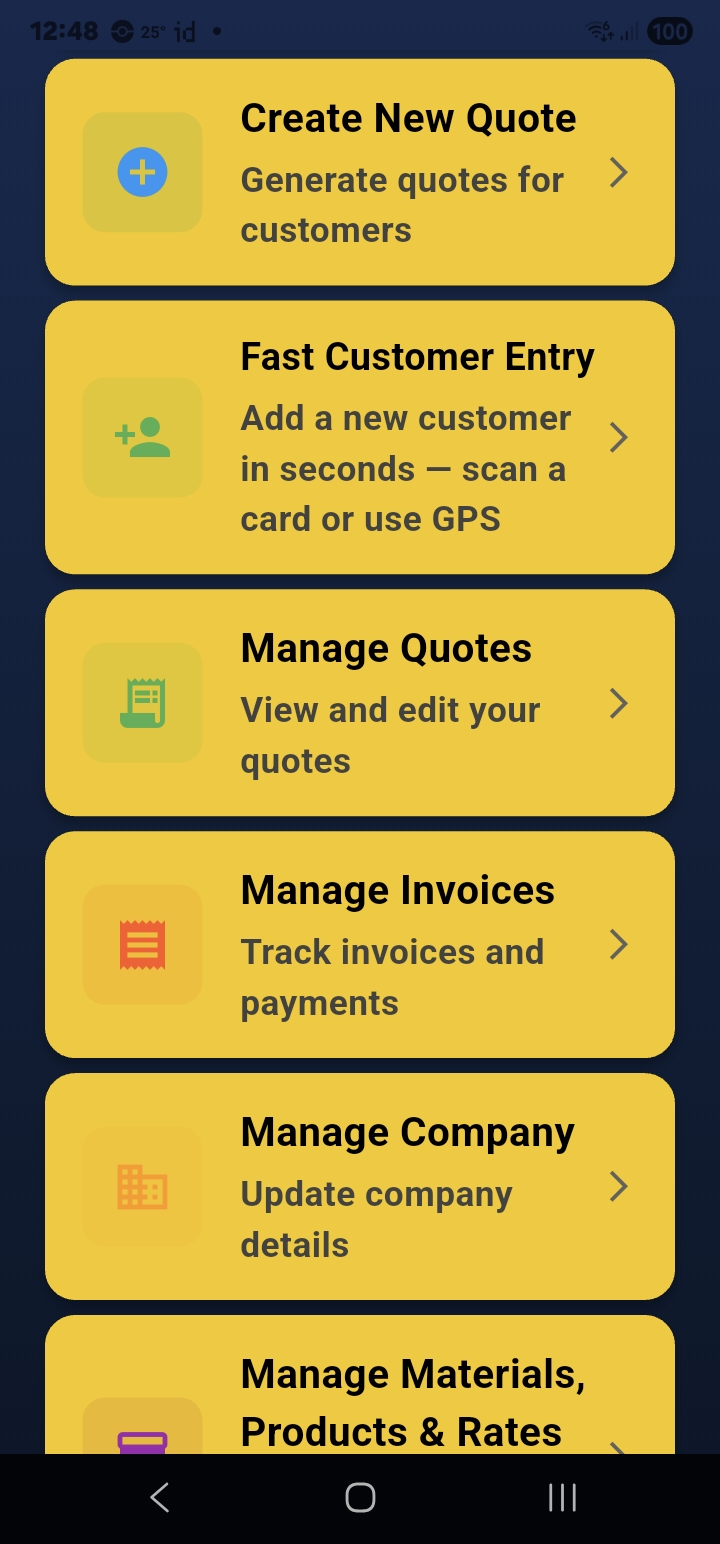
Quote jobs in seconds. Free forever.
No spreadsheets. No expensive subscriptions. Send professional quotes from your phone, on-site.
Download CoreQuote Free on AndroidTypically 2–5x EBITDA for small businesses, higher for those with recurring revenue and systematised operations. A business broker with construction industry experience will provide the most reliable valuation.
Reduce owner-dependency, systematise operations, build a loyal customer base with documented history, and maintain clean financial records. Three years of clear accounts is the minimum a buyer will want to review.
Typically six to eighteen months from the decision to sell to completion. Preparation, finding a buyer, and completing due diligence and legal work all take time. Starting two years before your target exit gives you the best outcome.