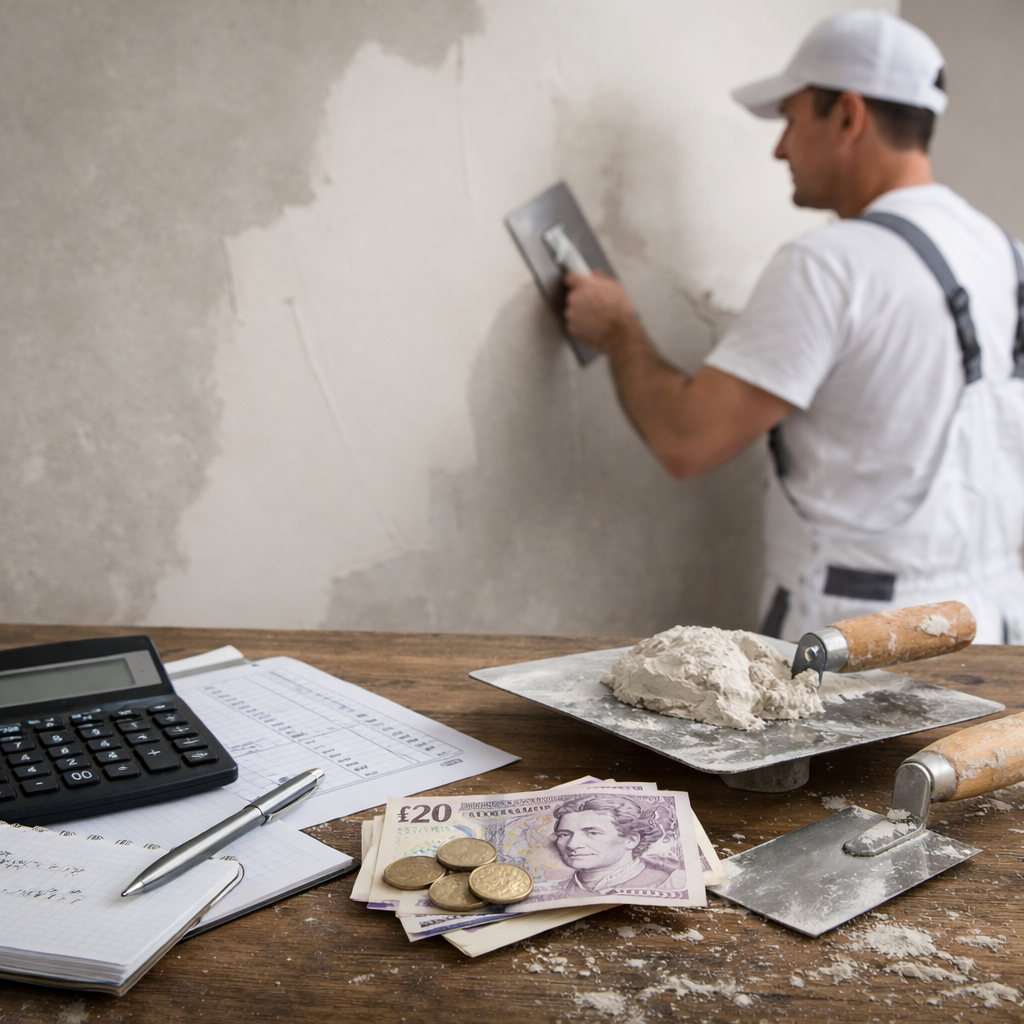
How Much Does a Plasterer Charge Per Hour in the UK? (2026

How much does a plasterer charge per hour in the UK? In 2026, plasterers typically charge £25-£65 per hour depending heavily on region — London and the South East sit at the top of that range — or £150-£380 per day, depending on their experience, location, and the type of plastering work involved. This guide breaks down plasterer hourly rates in full, explains what drives the variation, and helps both plasterers setting their rates and customers comparing quotes.
UK Plasterer Hourly Rates in 2026
How much a plasterer charges per hour varies significantly across the UK:
| Region | Typical hourly rate | Typical day rate |
|---|---|---|
| London | £40-£65/hr | £250-£380/day |
| South East | £35-£55/hr | £220-£330/day |
| Midlands | £28-£45/hr | £180-£270/day |
| North of England | £25-£42/hr | £160-£250/day |
| Scotland/Wales | £24-£40/hr | £150-£240/day |
Source: Checkatrade plastering costs, Rated People market data, 2026.
Most plastering jobs are priced by the square metre or as a day rate rather than strictly by the hour – but understanding the hourly equivalent helps you assess whether quotes are fair.
What Drives Plasterer Hourly Rate Variation
How much a plasterer charges per hour depends on:
Experience and quality: An experienced plasterer with 15 years of finishing work commands significantly more per hour than someone newly self-employed. The quality of a plasterer’s finish is immediately visible – and customers pay for excellence.
Type of plastering work: Specialist work – Venetian plaster, ornate cornice repairs, heritage lime plastering – commands a premium hourly rate over standard skimming. Renderer and dot-and-dab work typically falls at the lower end of the plasterer hourly rate range.
Location: Plasterers in London and the South East charge 20-40% more per hour than those in other regions, reflecting local labour market rates and higher business costs.
Accreditations: A CSCS card holder or CIOB member plasterer justifies a higher hourly rate, particularly for commercial work.
Plasterer Day Rate vs Hourly Rate vs Per M² Rate
Most experienced plasterers don’t quote by the hour – here’s why:
Day rate (£150-£280/day): Best for whole-room or multi-day jobs. Gives the plasterer certainty and the customer predictability. Avoids clock-watching.
Per m² rate (£7-£14/m² for skimming): Common for large volume work or when the customer wants to compare plasterers accurately. Forces the plasterer to estimate area correctly.
Hourly rate (£25-£50/hr): Used for small jobs, repairs, or patch plastering where the scope is genuinely unclear at the start.
Fixed price: A fixed quote for a defined scope – e.g. “skim bedroom ceiling and two walls, including all materials – £380.” This is what customers prefer and what wins jobs.
See HMRC guidance on self-employment income for how these earnings are taxed.
How Plasterers Should Calculate Their Minimum Rate
If you’re a plasterer setting your hourly rate, don’t guess. Calculate:
- Annual overheads: van, insurance, tools, phone, accountant – typically £8,000-£14,000/year
- Desired income: what you want to take home after tax
- Billable days: realistically 200-220 days/year after holidays, sick, admin
- Divide: (overheads + desired income) ÷ billable days = minimum day rate
Example: £12,000 overheads + £40,000 desired income = £52,000 needed. ÷ 210 days = £248/day minimum.
Anything below this and you’re trading at a loss.
Conclusion
Pricing correctly is not about charging the most – it is about charging enough to run a sustainable, profitable business. The tradespeople who consistently undercharge are not doing customers a favour; they are putting their businesses at risk and making it harder for everyone in the industry to charge fair rates. Know your costs, add your margin, and price with confidence. For further guidance, visit CITB: plastering training.
Frequently Asked Questions
How much does a plasterer charge per hour for a small repair?
For small repairs and patch plastering, how much a plasterer charges per hour is typically £30-£50, plus a minimum call-out charge of 1-2 hours. Most plasterers apply a minimum charge for any job – usually £80-£150 – to cover travel and setup time.
Is £40 per hour reasonable for a plasterer?
Yes. £40 per hour for a plasterer in 2026 is within the normal range for most UK regions outside London. For a highly experienced plasterer in the South East, it’s at the lower end. See MyJobQuote’s plastering cost guide for regional comparison data.
How much does a plasterer charge for a room?
Plastering a standard bedroom (skimming walls and ceiling, approximately 45m²) typically costs £350-£650 in materials and labour. The plasterer’s day rate and the condition of the existing surfaces are the main variables.
Should I hire a plasterer by the hour or get a fixed quote?
For any job larger than a small repair, get a fixed quote. A fixed price protects you from unexpected cost and gives the plasterer an incentive to work efficiently. Hourly rates work for genuinely open-ended repair work.
Quote plastering jobs at your actual rate
CoreQuote turns your day rate straight into a professional quote — no re-typing the numbers into a different app.
Download CoreQuote FreeSee everything CoreQuote does on the download page.
Related reading:
- How to Start a Plastering Business in the UK: The Complete Guide
- How to Get More Work as a Plasterer: 10 Proven Methods
- What Qualifications Do You Need to Be a Plasterer in the UK?
- How to Quote for Plastering Work: Rates, Templates and Tips
Plasterer hourly rates in the UK typically range from £25–£65 per hour depending on region, experience, and job type. London and the South East sit at the top of that range, often £40–£65 per hour, while the North of England and Scotland/Wales are typically £24–£42 per hour. However, most plasterers price larger jobs by area (per m²) rather than hourly, as it gives both parties more certainty. Hourly rates are more commonly quoted for small repair jobs or work where the scope can’t easily be measured in advance.
For most jobs, a fixed price per job or per square metre gives you more certainty about total cost. Hourly rates can work for small repair jobs where the scope is unclear — a crack fill or a small patch — but on any significant work, a fixed-price quote protects you from open-ended costs. Always get a written quote that specifies what is included before work starts.
Price variation between plasterers reflects several factors: region (London prices 20–30% above national average), experience level (master plasterers with 15+ years experience command higher rates than recently qualified), job type (heritage lime work costs more than standard skim), and current demand. During busy periods, prices rise because good plasterers can afford to be selective. Getting three quotes is the best way to understand the local market rate for your specific job.