

How to Price a Job So You Actually Make a Profit (USA)


Most US contractors undercharge. Not because they don’t know their worth – but because they’re guessing. They price a job based on what feels right, what a buddy charges, or what they think the customer will accept. Then they wonder why, after a solid week on the tools, the bank account doesn’t reflect it.
Pricing correctly is the single most important business skill a self-employed contractor can have. This guide shows you how to do it.
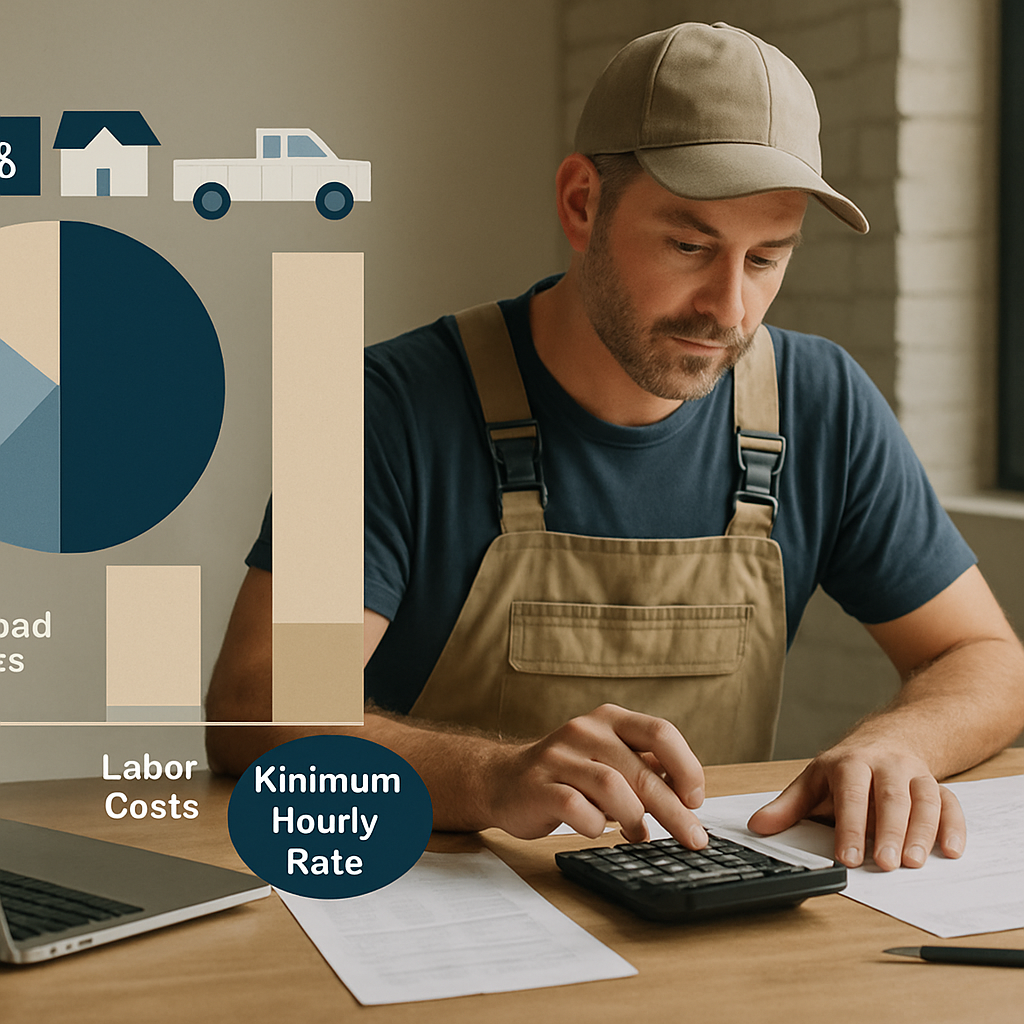
Step 1: Know Your Minimum Hourly Rate
Before you price anything, you need a floor – the minimum you must charge to cover your costs and pay yourself a living wage.
Annual costs to cover (example):
| Cost | Annual |
|---|---|
| Target take-home pay | $65,000 |
| Truck payment + insurance | $8,400 |
| Tools and equipment | $3,000 |
| Business insurance (GL + workers comp) | $3,600 |
| Health insurance | $6,000 |
| Self-employment tax (15.3%) | $9,945 |
| Phone, software, admin | $1,200 |
| Total needed | $97,145 |
Divide by 1,200 billable hours (realistic for a sole proprietor after vacation, admin, estimating time):
Minimum rate = $81/hr before markup
Step 2: Add Your Profit Margin
Your minimum rate covers costs – it doesn’t build a business. Add a 20-30% profit margin on top:
- At $81/hr + 25% margin = $101/hr
- Materials: mark up at 15-20% above your cost
This is not gouging. This is what allows you to buy a truck when yours dies, hire an apprentice, take a vacation, and grow.
Step 3: Price by the Job, Not Just the Hour
Customers prefer fixed prices. Job pricing = (hours estimated × hourly rate) + materials + markup. Always add a 10-15% contingency on larger jobs.
Step 4: Stop Competing on Price
If you’re regularly losing jobs to the cheapest bidder, you’re chasing the wrong customers. Homeowners who choose on price alone are the most likely to dispute, complain, and leave bad reviews. Price for the customer who wants the job done right.
Frequently Asked Questions
US contractors typically charge $75-$200/hr depending on trade, state, and experience. Electricians and plumbers in major metros often charge $150-$200/hr. See our US contractor hourly rate guide for full breakdowns.
Self-employment tax is 15.3% on net earnings (covering Social Security and Medicare). Build this into your overhead calculation as shown above – don’t treat your gross revenue as your income.
CoreQuote is a quoting and invoicing app for contractors and tradespeople. Download free on Android — get CoreQuote free.
The Most Common Pricing Mistakes and How to Avoid Them
Most pricing errors in trades businesses fall into one of three categories: underestimating time, underpricing materials, or failing to account for overhead.
Underestimating time
The most consistent pricing mistake is estimating job duration based on how long the work takes when everything goes right — and everything rarely goes right. Build a contingency into time estimates for: unforeseen complications revealed on starting work, customer-caused delays (materials not available, access issues), and the non-productive time on every job (travel, setup, cleanup, customer discussion). A rule of thumb used by experienced contractors is to add 20–30% to your initial time estimate before pricing labour.
Underpricing materials
Pricing materials from memory rather than current supplier prices leads to systematic underquoting when costs rise. Build your material pricing from a regularly updated price list rather than recalled figures, and add a materials handling margin (typically 10–15% above your supplier cost) to cover procurement time, waste allowance, and small items not individually itemised.
Ignoring overhead
Van costs, tool replacement, insurance, phone, software subscriptions, and the unbillable administrative time of running a business all need to be recovered from job revenue. Many sole-trader contractors either ignore overhead entirely or underestimate it. A simple annual overhead calculation — total fixed costs ÷ billable days — gives you the overhead contribution per day that needs to be covered before you make any profit.
Quote professionally with CoreQuote
Free to start. No card required.
Download on AndroidDownload on iOS